
Engineering Solutions Transform Wells Street into a Multimodal Destination
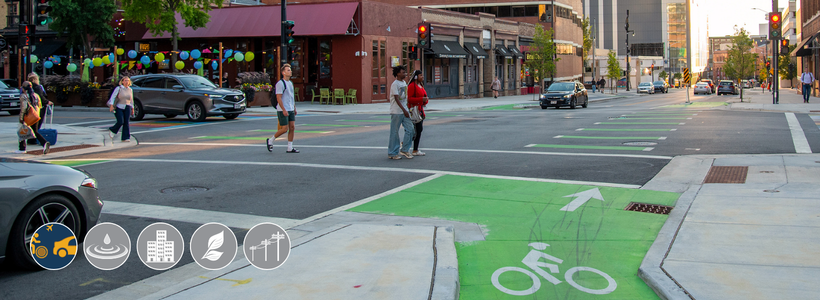
The E. Wells Street corridor between N. Broadway Street and N. Van Buren Street in Milwaukee serves as a model for future space allocation reconstruction projects, transforming the roadway into a vibrant community destination.
The project incorporated one of Wisconsin's first raised, separated bicycle tracks, creating safe, multimodal travel and additional space for pedestrians, restaurant seating, and landscaping.
Additionally, the project included a variety of public right-of-way improvements such as new sidewalks, ADA-compliant curb ramps, storm sewer, traffic signals, street lighting, city underground conduit, and pavement markings.
raSmith provided transportation and traffic engineering solutions, collaborating with the City of Milwaukee, Wisconsin Department of Transportation (WisDOT), lighting subconsultant Singh and Associates, and other stakeholders to bring this project to life.
Turning Obstacles into Opportunities
One of the primary challenges involved designing the roadway profile to fit within a downtown commercial district. The team used an innovative approach by designing the cross-section backward. raSmith set sidewalk elevations for both sides of the road based on existing grades, then established terrace and curb lines and blended the two sides into a single, cohesive roadway profile. This method ensured that every doorway, staircase, and private walkway was precisely matched and left unaltered.
Another challenge entailed heavy utility coordination. The project encountered an exceptionally complex, aged underground utility network — some dating back to the 19th century — including expansive steam, electrical, and telecommunications systems. Through detailed colored utility plans, extensive coordination meetings, and close collaboration with the City of Milwaukee, We Energies, and more than 20 utility entities, raSmith identified conflicts, uncovered previously unknown facilities, and resolved issues to keep the project on track.
Maintaining access for businesses and transit during construction was a key design priority. Achieving this required close coordination with property owners, the City of Milwaukee, and WisDOT to keep pedestrian routes open, rapidly restore sidewalk access at storefronts, and ensure uninterrupted operation of the City’s streetcar, "The Hop." To accommodate major public events such as Jazz in the Park and Bastille Days, the project incorporated a mid summer construction shutdown and advanced roadway work to maintain the schedule while minimizing impacts to pedestrians, transit riders, and the public.
Driving Successful Results
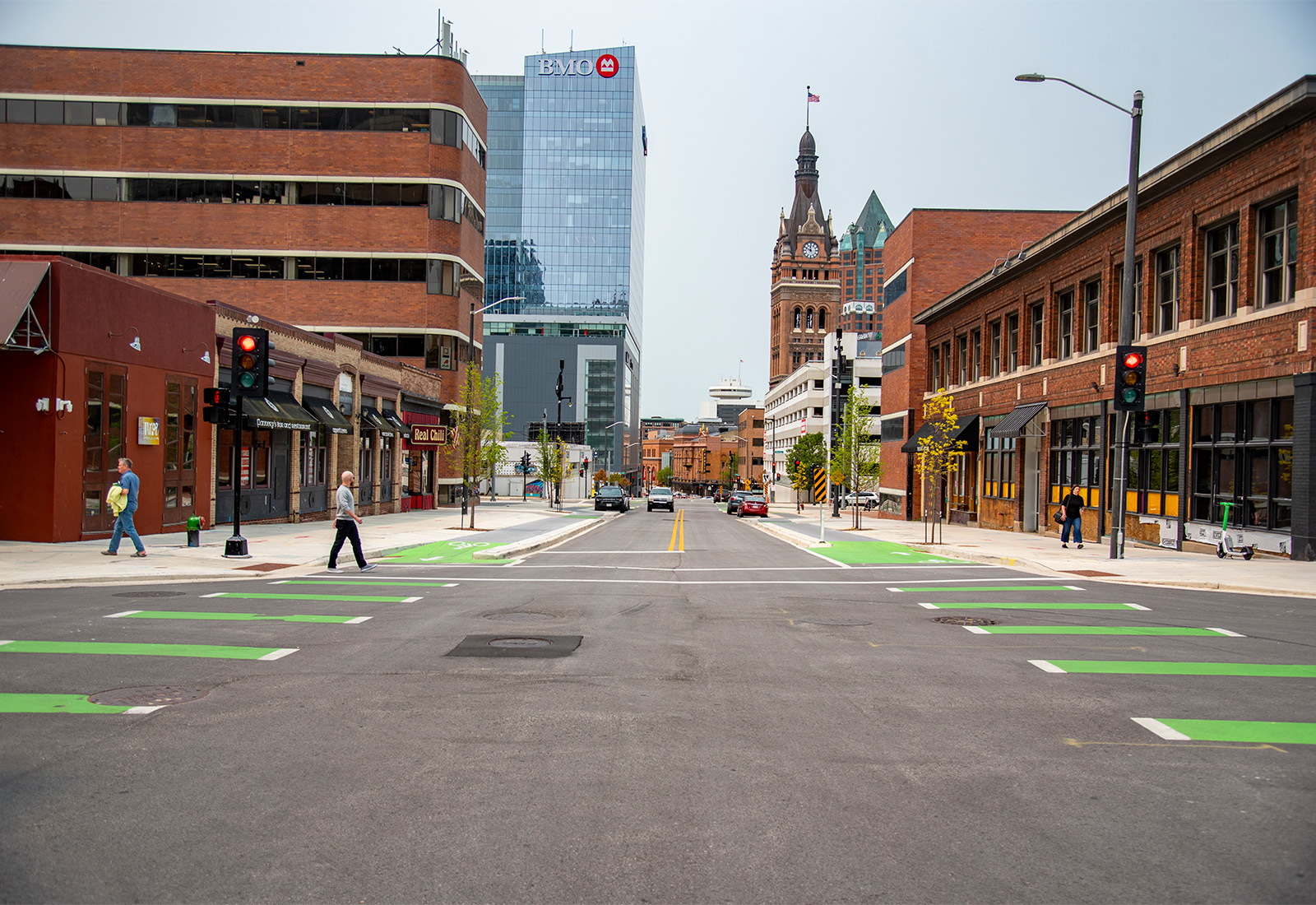
The E. Wells Street project has created a highly desirable space that improves safety, enhances the pedestrian and bicyclist experience, and supports long term community and environmental benefits. By reallocating space, the project improves access for pedestrians, bicyclists, transit riders, and drivers while expanding opportunities for landscaping, outdoor seating and dining, and public gathering spaces. The result is a thoughtfully designed example of how collaborative planning and innovative engineering can elevate the public realm and deliver lasting community value.
About the Guest Blogger
 Andy Axt, P.E., is a transportation project engineer in raSmith’s Transportation Division and served as the project engineer for the E. Wells Street project. Andy has 13 years of experience in transportation engineering. raSmith, a longtime ACEC member firm, is a civil and structural engineering and surveying firm. The company provides services on private-sector projects across the United States and public-sector projects in Wisconsin.