
Innovative Methodology Delivers Upgraded Bridge Under Bustling Railroad Activity
Written by: Quirin Klink, PE, MSA
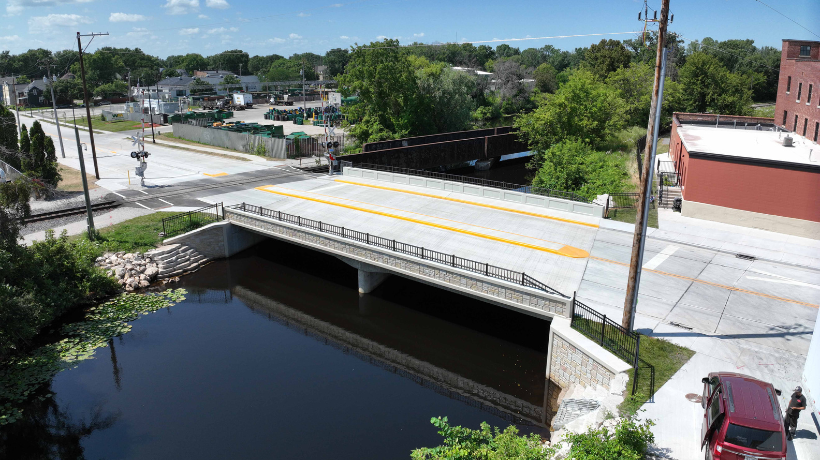
 Upgrading the West Division Street Bridge in downtown Fond du Lac was more than a simple remove-and-replace endeavor. Uniquely challenged, this project required engineers to largely deconstruct and rebuild a new structure over the river in a constrained urban environment while retaining enough infrastructure to support uninterrupted use by the Canadian National Railway, whose freight and switch trains utilize this stretch of track at a rate of approximately once every half-hour.
The MSA design team came up with a cost-effective solution: to utilize the existing adjacent bridge abutment along with temporary supports to hold the railroad fill in place during construction.
A Side-by-Side Strategy
While the existing abutment supported the active railroad track, the new West Division Street Bridge structure was constructed alongside. The temporary track support structure remained in place and was utilized through construction, up until the point where a new pile-encased concrete abutment was constructed (directly next to the former west abutment), all other bridge substructures (piers and east abutments) were in place, and the new bridge superstructure (bridge slab, sidewalks, railings, etc.) was formed and poured.
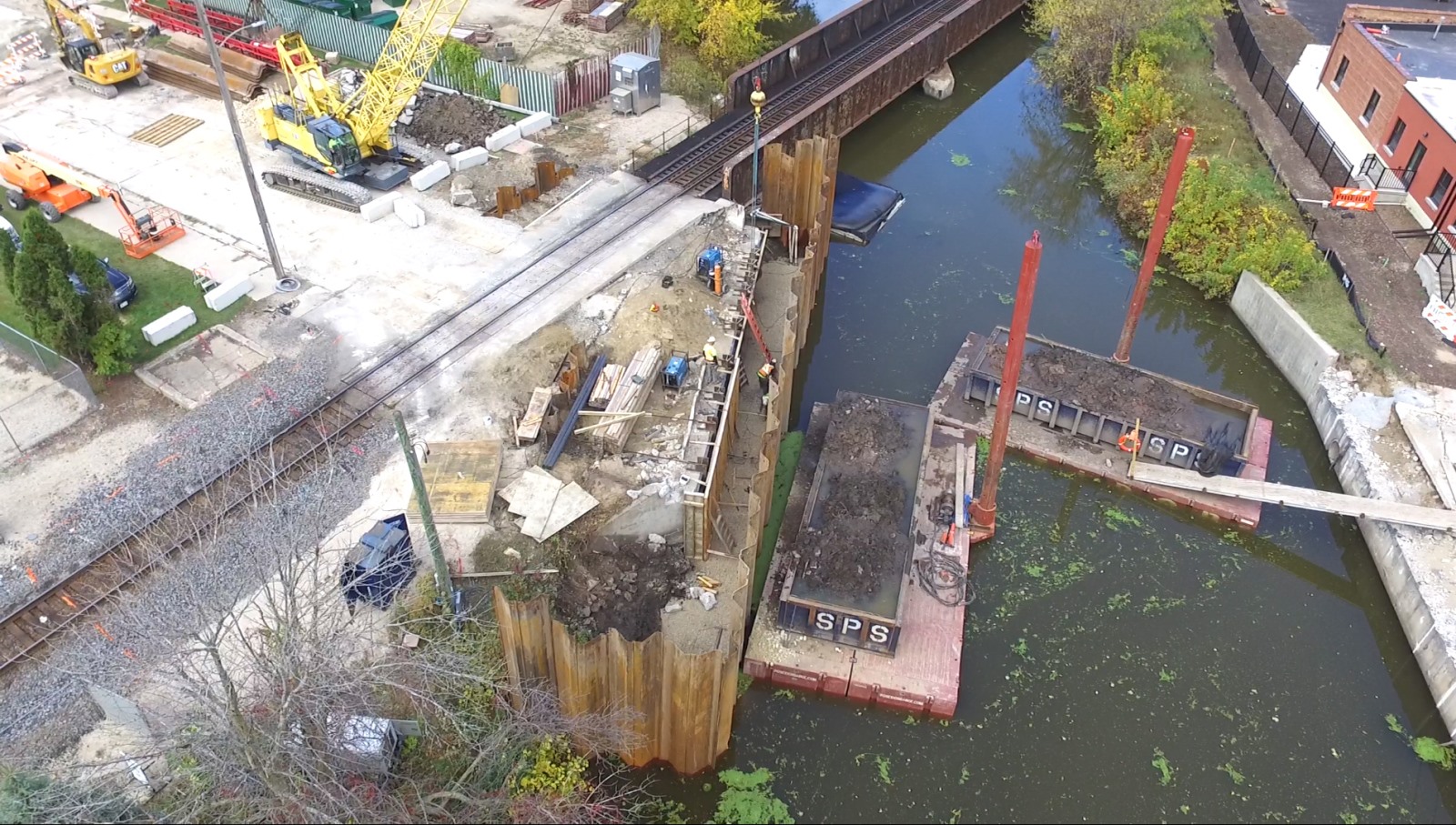 This innovative approach to a unique and complicated project site minimized railroad disturbance and allowed the former abutment components to be re-used, saving on project materials, time, and cost.
Coordinating Complex Constraints
Railroad accommodations aside, this project was challenging in other ways. The design team needed to coordinate project schedules, staging, and utility relocations with a city-led street reconstruction project underway along on each side of the project site. The designers also needed to be exceptionally mindful about construction operations, utilizing vibration-monitoring equipment to measure frequency so that construction operations would not adversely impact the masonry bricks of the adjacent 1914 Winnebago Cheese Factory — a building of historical significance designed by local architect Frank Stepnoski that was added to both the state and federal Register of Historic Places in 2022.
A Safer, Multi-modal Bridge
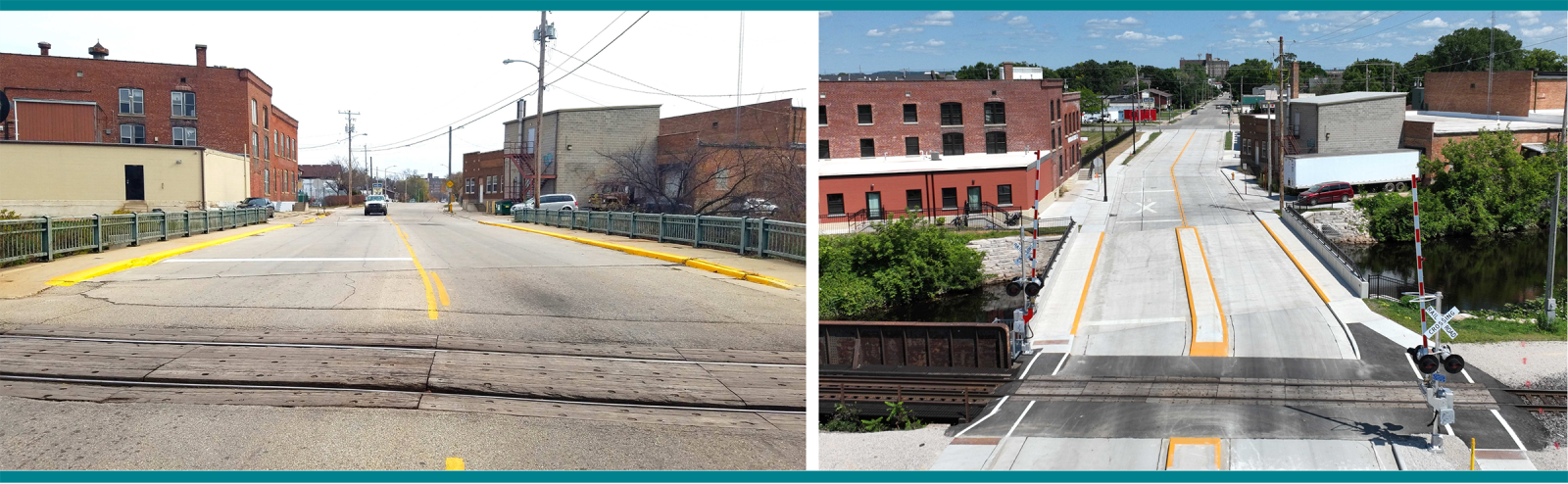
Regarding the bridge replacement itself, the original bridge structure was an aging, single-span prestressed box girder bridge, showing clear signs of age and deterioration. The 82-foot-long former bridge was rated in “poor” condition with a sufficiency rating of 43.9/100. Structurally deficient, the superstructure had earned a National Bridge Inventory rating of 3 on a scale of 1-9, with 3 being categorized as in “serious condition.” Further, the prior bridge’s open metal railing did not meet current crash safety standards.
The new bridge satisfies the structural and safety concerns by delivering a two-span, haunched concrete slab bridge. Each span is 40 feet in length for a total of 80 feet, with two 12-foot-wide travel lanes each accompanied by a 5.5-foot shoulder for a combined total clear roadway width of 35 feet from face-of-curb to face-of curb. It also includes a 6-foot-wide sidewalk on each side, continuing seamlessly across the railroad track to deliver safe pedestrian passage. In addition, the bridge includes a raised 5-foot-wide concrete median. This was implemented because the West Division Bridge crossing is located within a designated railroad “quiet zone,” which means that no locomotive horns can be routinely sounded — causing some impatient or inobservant drivers to navigate around deployed gates to cross the tracks quickly before a train arrives — a huge risk to safety.
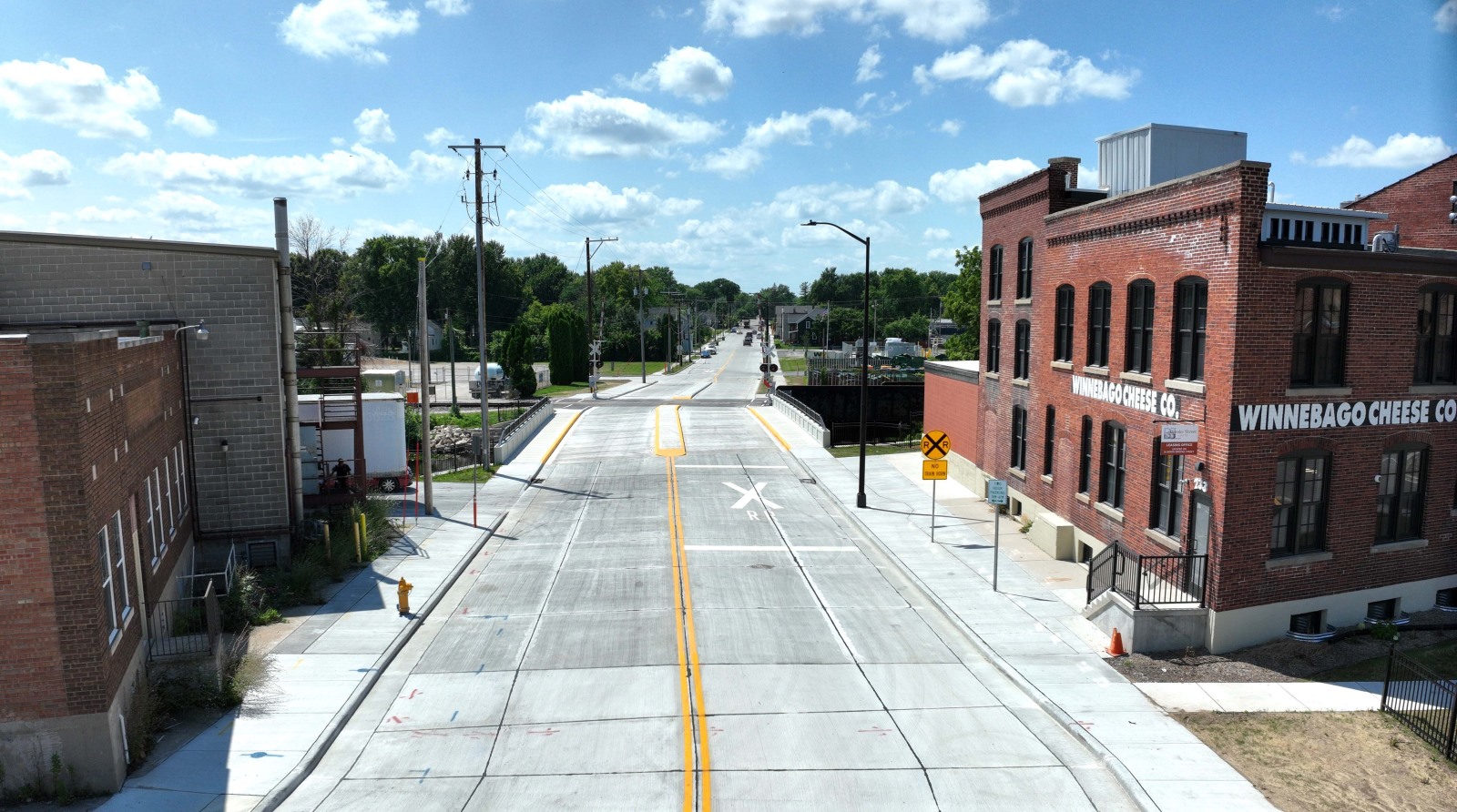
The new West Division Street Bridge also vastly improves the neighborhood aesthetic. Located within a former industrial area, the bridge is surrounded with beautiful old brick warehouses that are being repurposed and tastefully redeveloped. The bridge project incorporates decorative railings and form-lined concrete surfaces to replicate a natural stone finish similar to other bridges in the city. It also utilizes cut-stone boulders for streambank stabilization along the river’s banks, a modern aesthetic that ties nicely into the brick/block style of the surrounding architecture.
All told, this project establishes a safe, reliable transit route for vehicles, trains and multi-modal users alike. It also enhances a key community revitalization project, improves property value, and sets the stage for future development within this up-and-coming area of Fond du Lac.
About the Guest Blogger
 Quirin Klink, PE, serves as a Transportation Engineering Senior Team Leader at MSA. Since joining the firm in 1991, he has designed and managed highway and bridge projects, performing all aspects of the work. MSA Professional Services, Inc. is a 100% employee-owned, full-service multidisciplinary consulting firm serving clients throughout the U.S. Based in 17 offices across Illinois, Iowa, Minnesota, and Wisconsin