STH 33 Baraboo: Revitalizing Communities by Improving Safety and Accessibility
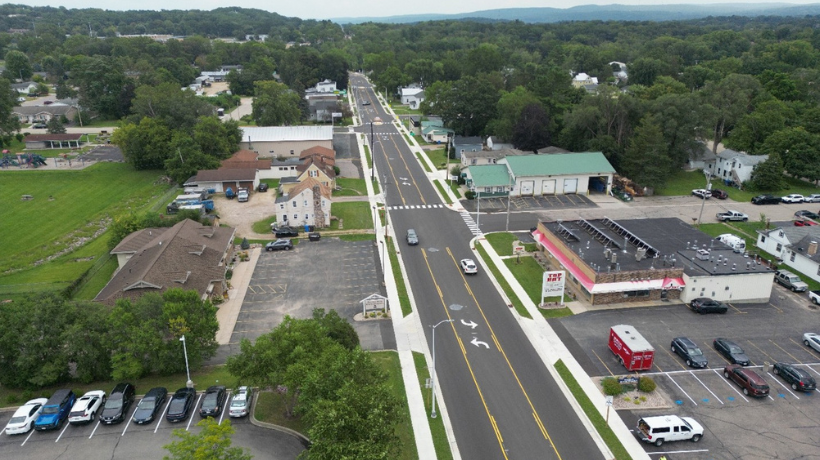
STH 33 guides traffic through the Village of West Baraboo and the City of Baraboo in Sauk County. It serves as an urban thoroughfare and provides important access to the current residents and businesses, as well as future planned developments. The project connects two communities and flows into the recently relocated USH 12 just west of the project limits.
Identifying the Challenge
Over the years, STH 33 has exhibited deteriorating pavement and substandard utilities and pedestrian facilities. The goal of the project was to improve safety and traffic operations without fully reconstructing the entire corridor or the need for capacity expansion.
The use of performance-based practical design (PBPD) reduced impacts, determined and addressed the project needs, identified safety improvements, and provided cost savings by utilizing the remaining life of the existing corridor where applicable. PBPD measures included evaluation of the existing sidewalk, storm sewer, water main, and sanitary sewer to determine condition and need for replacement.
Offering Innovation with Public Communication
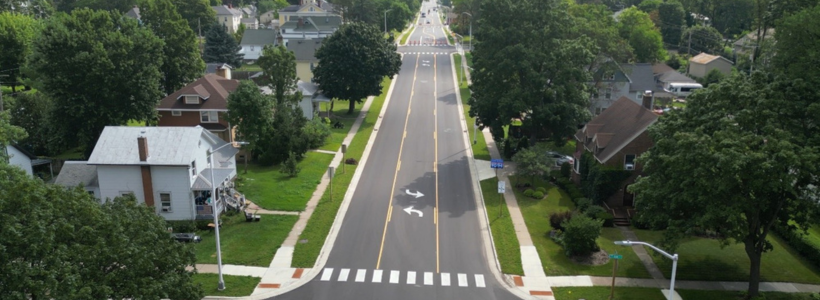
An interesting and innovative proposal for the project was to recommend a road diet, changing traffic operations from 4 lanes to 2 lanes with a two-way left turn lane (TWLTL) in the center of the low speed roadway. TWLTLs are commonly used in urban areas where there are numerous entrances and intersections. TWLTLs are highly effective in physically constrained areas in need of safety and operational improvements.
According to the Federal Highway Administration’s Information Guide, conversions to TWLTLs have shown a 19-47% reduction in crashes by:
- reducing the number of conflict points
- eliminating left turn traffic from through lanes
- providing room to accelerate before entering traffic
- reducing traffic queuing
- providing lane separation, improved sight distances, and area for refuge
Additional safety and operational improvements were made by:
- replacing over 150 non-ADA compliant curb ramps
- upgrading traffic signals and making operational improvements at key intersections that serve the communities
- installing new, more efficient LED street lighting
- adding five pedestrian refuge medians in area with high volumes and students en route to school
Road diets can produce a conflict of opinions for local community members since the loss of a travel lane is often perceived as worsening conditions rather than improving operations. To help alleviate these concerns, extensive coordination was completed with local officials and the communities. Several virtual and in-person meetings were held throughout the design process to explain the benefit of road diets/TWLTLs.
Maintaining access during construction for the local community members and businesses was a critical aspect of this project. Staging plans were developed to best accommodate traffic based on the needs of the communities while keeping in mind constructability for the contractors.
Overcoming Challenges
During the project the design team was challenged by:
- the constrained urban environment
- designing within the existing corridor footprint while minimizing impacts and utilizing the remaining life of the existing infrastructure
- extensive above ground and underground existing utilities
- archaeological and historic sensitive areas
- project coordination during COVID
- public concerns with road diet/TWLTLs
- construction staging and access control during construction
- steep sidewalk and roadway grades
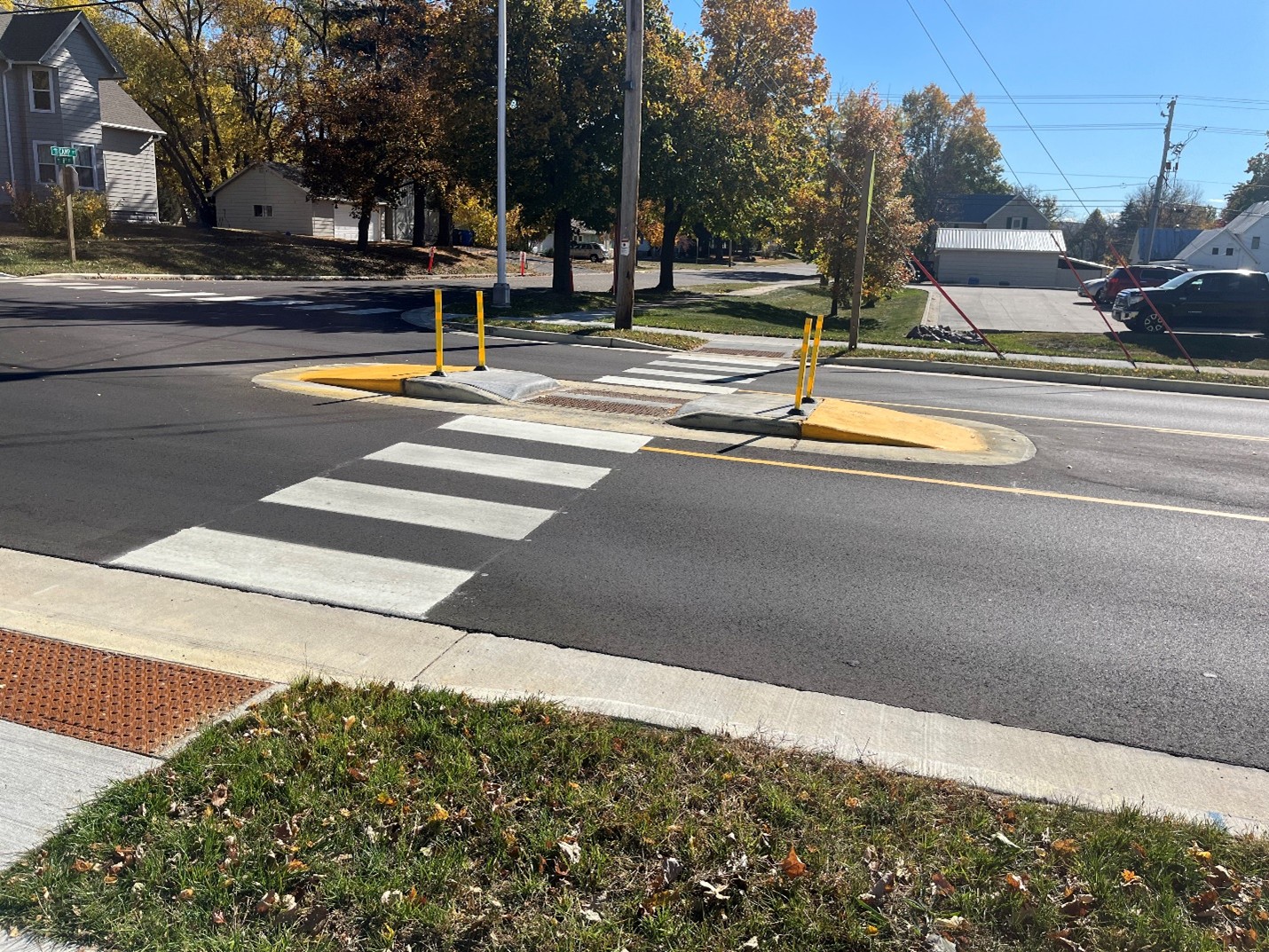 The design team successfully met these project challenges and provided successful solutions. PBPD was used to reduce impacts and to determine and address the project needs. Considerations for safety improvements, operational improvements, and the needs of highway users were made throughout the design process. Early and ongoing coordination with stakeholders and the public was key to completing the project and offering community members a revitalized roadway for traveling.
Enjoying the Results
Oneida Engineering Solutions (OES), working closely with WisDOT’s Southwest Region and the local communities, successfully designed, delivered, and reconstructed 2.47 miles of STH 33 through the Village of West Baraboo and the City of Baraboo in Sauk County to improve safety and accessibility and connect two communities with a revitalized thoroughfare. Introducing successful engineering solutions into our communities is a way to support a thriving community for all to enjoy.
 About the Guest Blogger
Brett Peterson, PE, is a Project Manager at Oneida Engineering Solutions (OES), LLC. OES was founded in 2017, a registered Minority Business Enterprise, Disadvantaged Business Enterprise, and subsidiary of the Oneida ESC Group, which is wholly-owned by the Oneida Nation. OES serves our customers from offices in Madison, Milwaukee, and Green Bay, WI. Brett participates in ACEC Wisconsin’s Transportation Committee and is a Leadership Institute graduate.