
Rebuilding Pike Creek Beneath Downtown Kenosha

Beneath the streets of downtown Kenosha, a critical piece of infrastructure quietly carried stormwater from seven square miles of urban watershed into Lake Michigan. Installed in the late 1950s, a 13-foot-diameter corrugated steel multi-plate pipe enclosed Pike Creek near City Hall, major roadways, local businesses, and the harbor walk. After more than 70 years of service, the system began to fail.
Surface settlement and structural deterioration raised concerns about collapse. With public safety, businesses, and downtown access at risk, the City of Kenosha needed a solution that addressed urgent infrastructure risks without disrupting daily life.
When Aging Infrastructure Fails
Rehabilitation was not feasible. Extensive deflection and deterioration required full replacement of the multi-plate.
Key risks included:
- Potential collapse beneath downtown streets
- Flooding from seven square miles of urban watershed
- Threats to nearby businesses and public safety
Ruekert & Mielke, Inc. (R/M) partnered with the City of Kenosha to design and manage construction of a new 10-foot by 12-foot precast concrete box culvert, replacing 450 feet of the failing system while keeping Pike Creek operational.
Designing a Solution in a Tight Urban Corridor
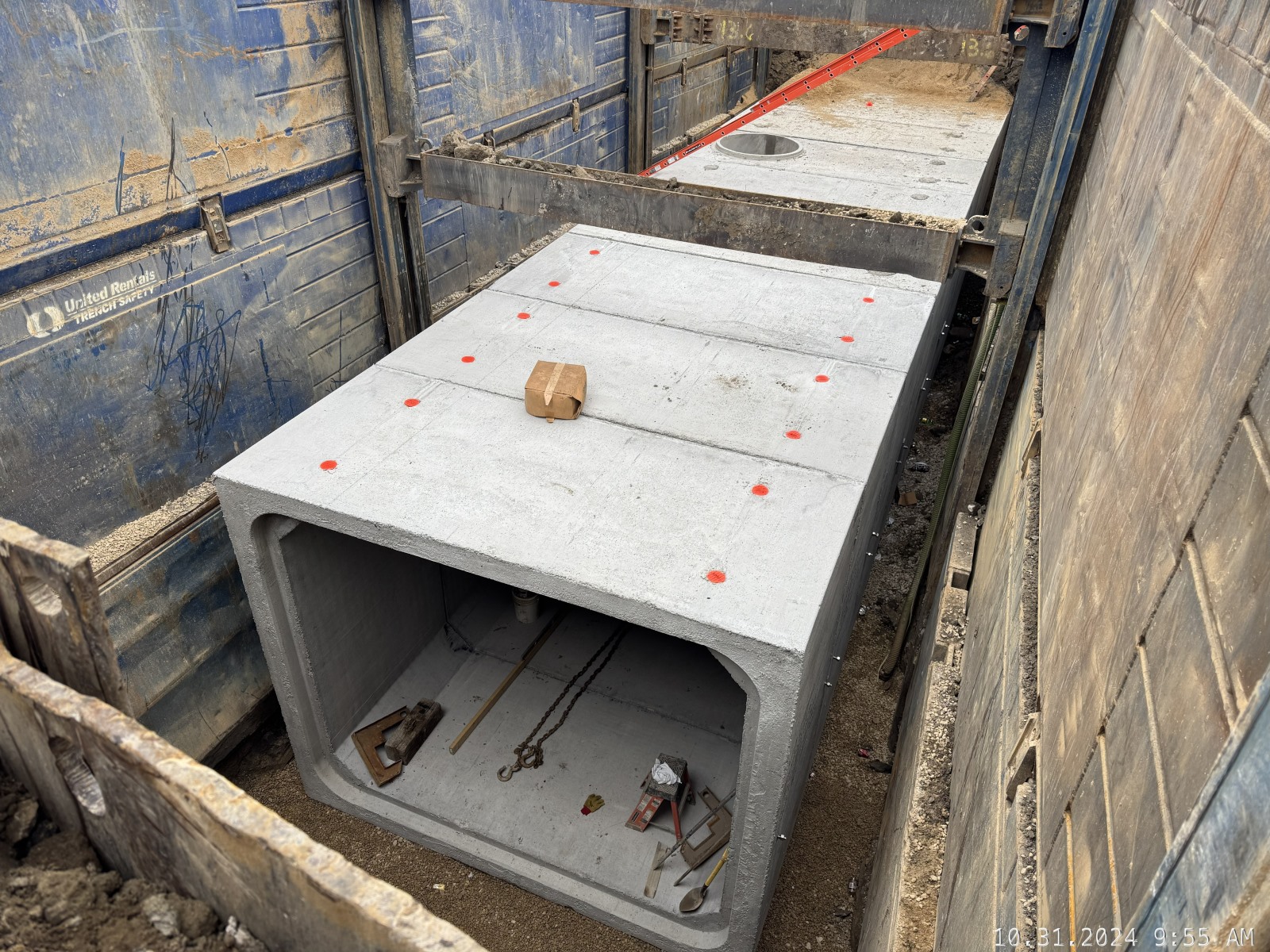
The project site presented significant constraints. Crews worked in a narrow corridor surrounded by active businesses and public spaces while managing stormwater flows that can surge during rain events. Lake Michigan water levels, groundwater, and ice forces added further complexity.
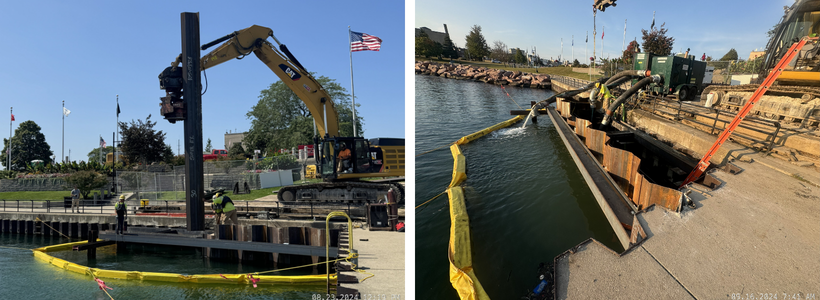
To address these conditions, the team designed a custom cofferdam system at the harbor outlet. The cofferdam isolated lake water and resisted ice pressure, allowing safe excavation and installation below grade. High-capacity pumps and real-time flow controls diverted clean creek water during construction and maintained uninterrupted stormwater conveyance.
Phased construction allowed the existing pipe to remain in service while crews installed the new box culvert along an offset alignment. This approach reduced flood risk and preserved access to nearby businesses throughout construction.
Protecting Lake Michigan and Local Businesses
Environmental protection guided every phase of the work. Pike Creek flows directly into Kenosha Harbor, a popular recreational area that supports fishing and boating. The team carefully managed bypass flows and dewatering to prevent sediment or pollutants from entering Lake Michigan.
Despite deep excavation and limited space:
- Businesses remained open
- Public access was maintained
- Economic disruption was minimized.
Building Long-Term Resilience
During construction, inspections revealed an unexpected failure in another section of pipe outside the primary work area. The team responded immediately, implementing an on-site temporary repair that prevented collapse without delaying the project.
Completed in August 2025, the new box culvert eliminated a major public safety risk and delivered a stormwater system designed to serve Kenosha for the next 75 to 100 years. The Pike Creek Multi-Plate Replacement provides reliable stormwater conveyance for seven square miles of urban watershed beneath one of Kenosha’s most active downtown corridors.
About the Guest Blogger
 Ruekert & Mielke, Inc. (R/M) is a 100% employee-owned civil engineering firm with more than 80 years of service to local communities and organizations. Our engineers, environmental scientists, agricultural experts, and technology consultants empower our clients to thrive by solving infrastructure challenges. R/M is an active member of ACEC Wisconsin.