
Historic Riverwalk Transformed: West Bend's Vision
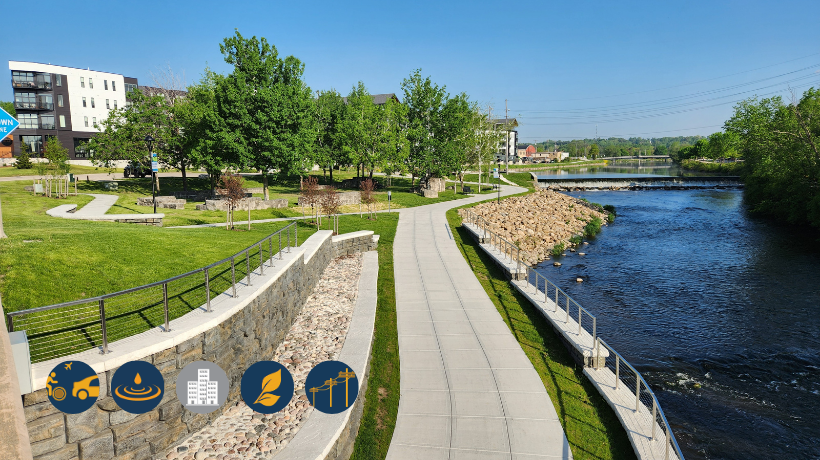
Urban spaces are more than sidewalks, streets, and buildings; they reflect how a community values connection, safety, and shared experience. When these spaces fall into disrepair, it’s not just infrastructure that suffers – it’s the people, the culture, and the economy around them.
With the right blend of planning, collaboration, and long-term thinking, even the most neglected spaces can be transformed into powerful assets that serve generations.
From Blight to Opportunity
Once an overlooked stretch of the riverfront, the Milwaukee River in downtown West Bend became more of an eyesore than an asset. Crumbling infrastructure, safety concerns, and underuse made it easy to dismiss, but the potential was there, tucked between historic buildings and the steady flow of the river. City leaders, residents, and local organizations didn’t just see a broken walkway. They saw an opportunity to reconnect the riverfront to the heart of the community.
A Connected, Resilient Downtown
At the core of the transformation was a connection between people and places, business and culture, art and environment. The new Downtown Riverwalk now offers:
- Enhanced pedestrian connectivity with an underpass beneath the heavily traveled STH 33, linking North and South Main Street
- Safe, well-lit access to the river, trails, parks, and downtown
- Seamless integration with surrounding historic and cultural sites
- New amenities – ADA accessibility, kayak launch, seating areas, etc.
Managing flood risk was another major hurdle. The site, which was located within a floodplain, required a careful balance of protection, ecology, and aesthetics. The team worked closely with state and federal agencies to reconfigure drainage systems, incorporate stormwater filtration, and rebuild retaining walls using sustainable techniques. Added features like tree wells and permeable surfaces supported native vegetation and helped reduce runoff into the river.
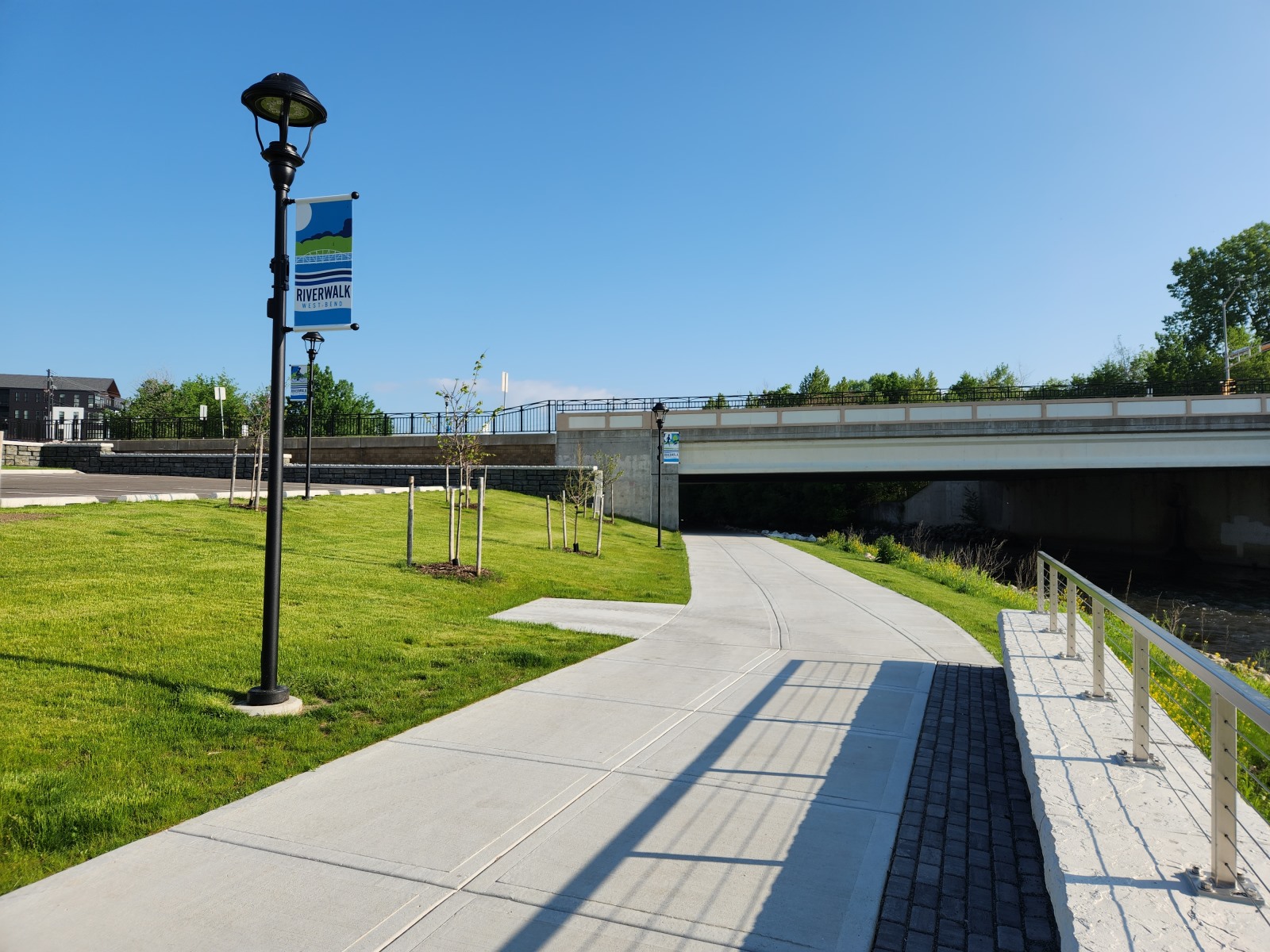 But redesigning this space meant more than creating a scenic walkway. Extensive coordination with utility companies, historic property owners, and private landholders was essential. A new underground conduit system was built to house utilities, all within a tight footprint shared with aging infrastructure.
While technical challenges practicality shaped the project, financial constraints and the need to maintain everyday life called for creative problem-solving to overcome. Grant funding helped offset the financial burden, phased construction minimized disruption, and tight urban spaces were navigated without halting downtown activity.
A New Chapter for West Bend
For the people who live, work, and spend time in West Bend, the new Riverwalk is more than a walkway – it’s a destination. A backdrop for summer evenings. A reason to enjoy the river instead of avoiding it. And maybe most importantly, the West Bend Downtown Riverwalk is a reminder that even the most overlooked spaces can become something meaningful with the right mix of vision, dedication, and collaboration.
About the Guest Blogger
 Robbie Malzahn, PE, is a project engineer at SEH and was the RPR and project manager for the West Bend Downtown Riverwalk project. Robbie has over 10 years of experience in design and construction of public infrastructure. SEH, a long-time ACEC WI member, is an employee-owned engineering, architectural, environmental, and planning company dedicated to helping clients find answers to complex challenges.